
Holter and MCOTs
Continuous cardiac monitoring solutions to detect irregular heart rhythms and evaluate heart performance accurately and comfortably.
Continuous Heart Monitoring — for the Moments You Don't Feel
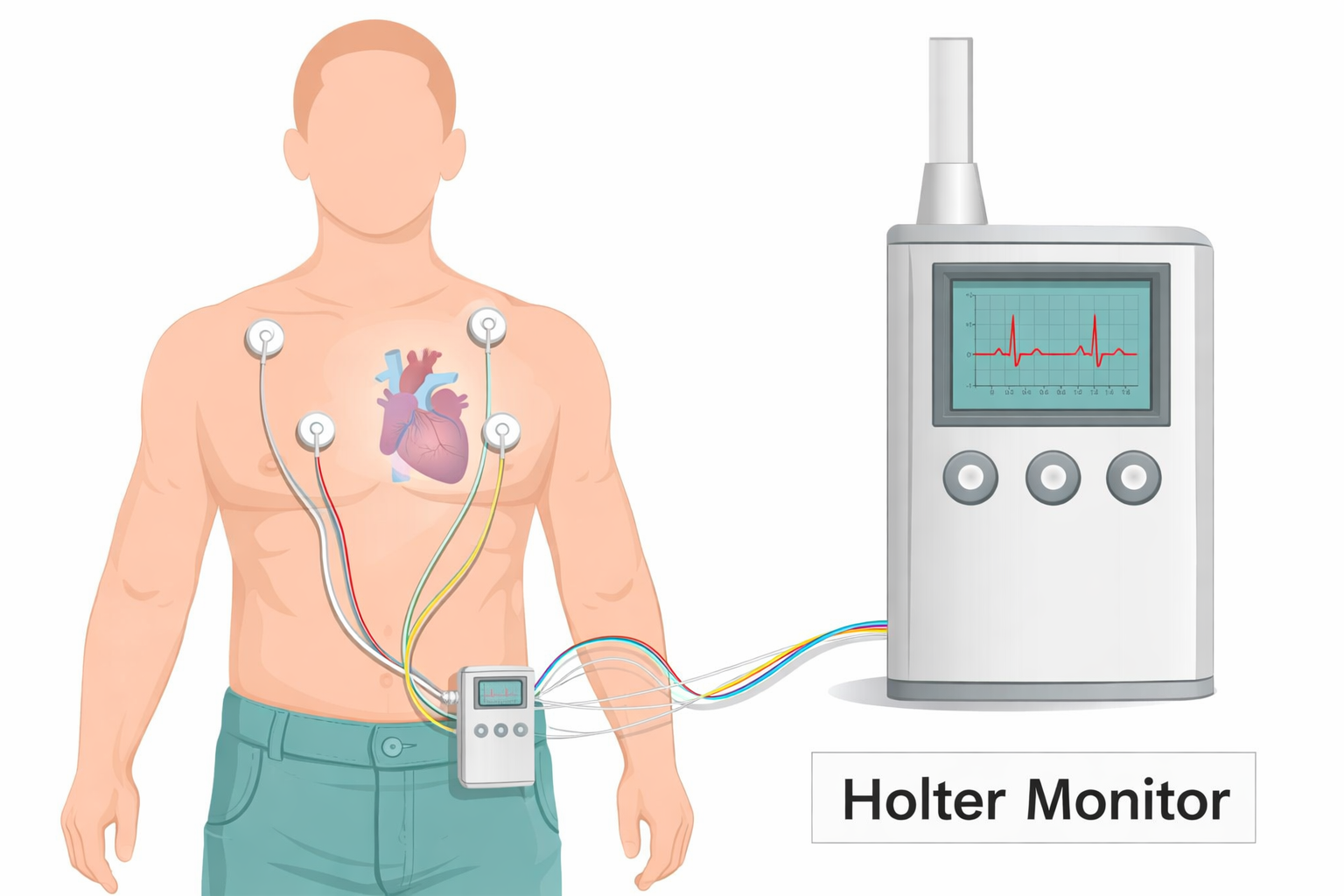
At Southwest Virginia Cardiology, we know that heart rhythm problems don't always happen during a regular doctor's visit. That's why we offer Holter and MCOT monitoring — simple, comfortable tests that track your heart's activity while you go about your daily life.
These advanced tools help our cardiologists detect irregular heartbeats, evaluate symptoms, and understand how your heart performs over time.
What Is a Holter monitor?
A Holter monitor continuously records your heart's electrical activity over several days.
What Is MCOT?
MCOT monitoring records your heart activity and transmits data in real time.
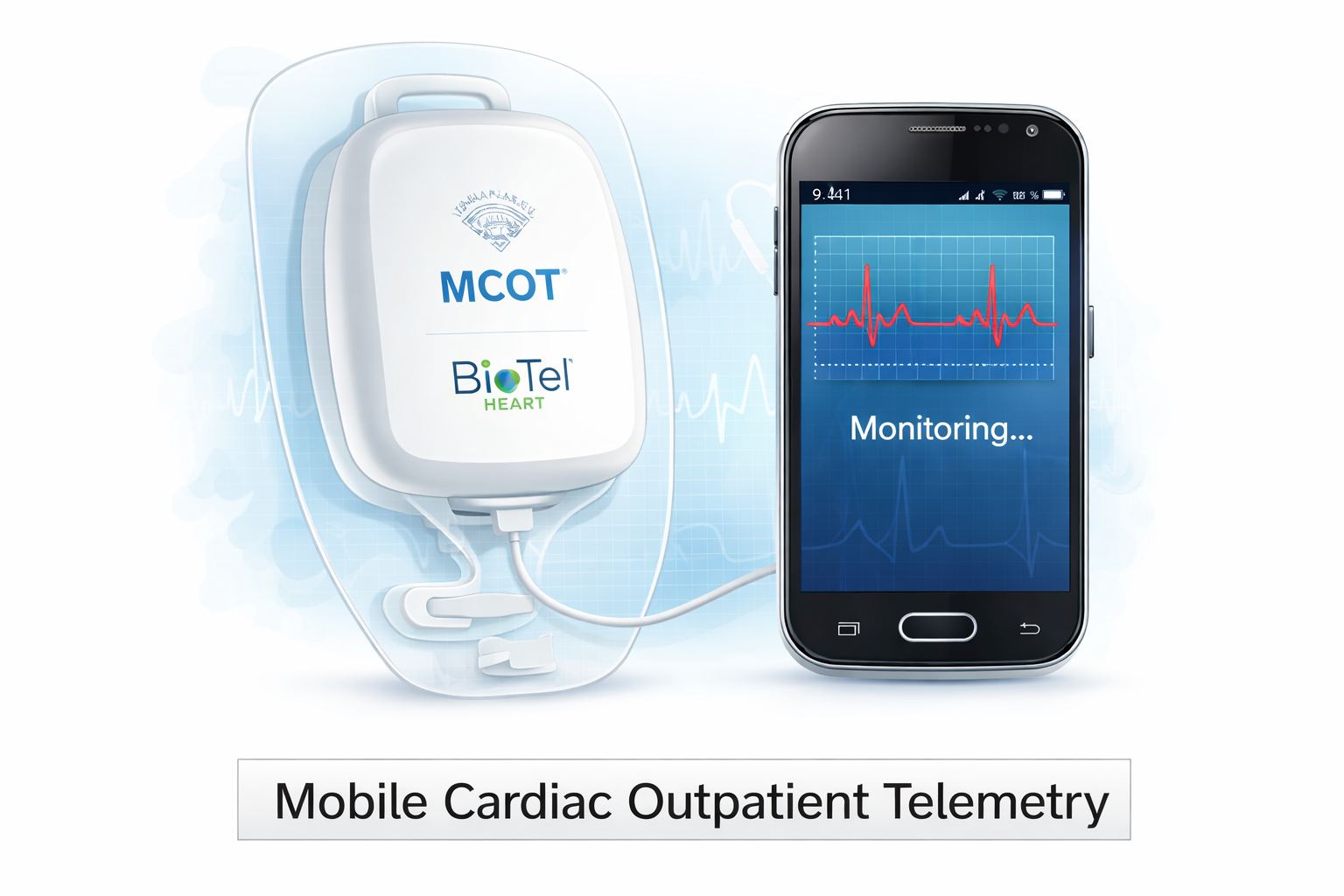
MCOT is often used when:
- Symptoms occur infrequently
- History of fainting or dizziness
- Long-term observation beyond 48 hours
Why These Tests Matter
Holter and MCOT monitoring help diagnose:
- Irregular heart rhythms
- Unexplained dizziness
- Palpitations
- Medication effectiveness
Ready to Take the Next Step?
If you have concerns about your heart health or need specialized cardiovascular care, our team is here to help. Request an appointment today and experience heart care led by experts you can trust.
Our Services
Frequently Asked Questions – Holter & MCOT Monitoring
1. What is a Holter monitor? +
A Holter monitor is a small, wearable device that continuously records your heart's electrical activity while you go about your normal daily activities. It helps detect irregular heartbeats that might not show up on a standard ECG test.
2. What does MCOT stand for and how is it different from a Holter monitor? +
MCOT stands for Mobile Cardiac Outpatient Telemetry. Like a Holter monitor, it records your heart's electrical activity—but it also transmits data in real time to a monitoring center so abnormal rhythms can be reviewed sooner.
3. Why would my doctor recommend Holter or MCOT monitoring? +
These tests are often used when you have symptoms such as irregular heart rhythms, palpitations, dizziness, or fainting that weren't captured by a regular ECG. They help cardiologists diagnose conditions and evaluate treatment effectiveness.
4. How long will I wear the monitor? +
A Holter monitor is typically worn for 24 to 48 hours. An MCOT monitor may be worn for a longer period (often several days to weeks) depending on symptom frequency and your doctor's recommendation.
5. Will I feel anything while wearing it? +
No. These devices don't cause pain. They record your heart's activity in the background while you go about your day. Some people may feel mild skin irritation where electrodes are attached.